
Do you know the name Frederick Taylor? Maybe not. Maybe you got an MBA and had to read The Principles of Scientific Management. Maybe you happened to be awake that one day in college when your American history class was studying industrialization and the Gilded Age. Like I said... maybe not.
Frederick Taylor was the first person to successfully apply "scientific" principles to industrial production. He believed that businesses that produced things could produce those things efficiently and with higher quality if every aspect of the production system were studied and scrupulously monitored. Eli Whitney invented interchangeable parts, but Frederick Taylor invented something even more enduring in our culture: management consulting. Management consulting thrives on the prevailing idea that there is always a way to re-organize a business to produce stuff more efficiently. The process can always be improved.
Taylor was a smart dude. Implementing his ideas transformed businesses and increased productivity. What were his insights? Here are Taylor's four principles of scientific management:
- Replace rule of thumb work methods with methods based on a scientific study of the tasks (ie, standardize all work tasks).
- Scientifically select and then train, teach, and develop the employee, whereas in the past the employee chose their own work and trained themselves as best they could.
- Provide detailed instruction and supervision of each worker in the performance of that worker's discrete task.
- Divide work nearly equally between managers and workers, so that the managers apply scientific management principles to planning the work and the workers actually perform the tasks (ie, the creation of a "management class").
But the effects of implementing Taylor's methods are not all positive. Taylor, more than anyone else, is responsible for the mechanization of the American worker. Workers, post-Taylor became part of the industrial process--inputs to be shaped and controlled. Workers were parts of the machine to be routinized; dispensable if they didn't meet efficiency standards. Taylor personally had an exceptionally low concept of the worker--he believed workers to be dull, stupid, ignorant. They were not fundamentally different than the steel they forged. Taylor's innovations underscored social differences between labor and management; he put all the legitimate power in the hands of the latter.
OK. You're devastatingly bored by now and/or you're begging me to get to the point.
Here's my question: Do any of you feel like scientific management is quietly doing to the church what it did to business? That is, applying management theory (and by "theory" here I don't just refer to Taylorism, but to Peter Drucker, Jim Collins, whomever is the management guru du jour) to churches creates wonderfully "successful" systems in terms of outputs (butts in seats); but do these systems necessarily define congregants as objects to be shaped and controlled? I'm wondering if there aren't hidden and unforeseen costs to importing management theories from the business world to the church.
This line of questioning was spurred by a training session I attended this week sponsored by my presbytery (the local association of Presbyterians). Our group of pastors met two other pastors, both the heads of very "successful" new churches. Both pastors got a turn to present what they do, and each had a lovely PowerPoint presentation detailing the "systems" and "methodologies" that they use to develop their businesses--er... I mean, churches. The first pastor talked excessively about her "market audience" and how she developed her church's look and feel and practices to appeal to her target market. She also talked a lot about her strategic use of social media. The second pastor shared his theory of church management, worship planning, and leadership development; he actually talked about volunteers and their capacity levels (on a scale of 1-10) and joked about getting "too many 4s." Neither pastor ONCE mentioned God, Jesus, or the Holy Spirit. I'm not fond of overtly religious language myself, but this omission felt kind of... I dunno... ominous to me.
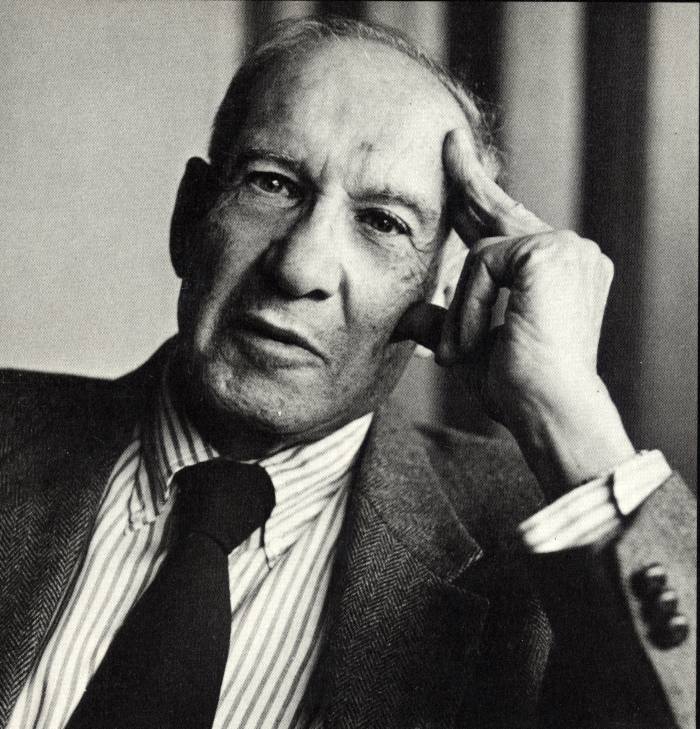 |
| Peter Drucker |
I know there are benefits. I'm just wondering: what are the hidden costs? I'll be blunt: if Taylorism reified social hierarchies and authorized and empowered a managerial class (power that has only increased over time, along with the yawning income gap between management and labor), what effects could management theories be having on the church? The church... you know--that place about which it was once said (somewhere), "there is neither Jew nor Greek, manager nor worker, male nor female, for all are One in Christ." Or something like that.
Anyone out there got any wisdom to offer on this subject?
short answer . . . yup :\ everyone ive visited to varying degrees. Its like arriving at a hotel most of the time . . . impersonal to a degree that greatly concerns me. because then, wth the point?
ReplyDelete"megachurches" are definitely the worst though. I tried to hang on at this church down the street, very CA modern, I was greeted by the Children of the Corn and treated to an invitation to their adolescent girl group... their judgement couldnt have been more obvious. it was awesome to walk away
ReplyDeleteknow whats not awesome? . . . how near i live to Rick Warren... shudder. bug you more soon Rev
ReplyDelete